Discriminative stimulus (DS)

Autism learner

The term “discriminative stimulus” is used in ABA therapy to refer to an environmental cue that indicates to an individual whether a certain behavior will result in reinforcement or not.

A discriminative stimulus is a key feature that does not directly cause a behavior but instead provides the context for the behavior.

Each discriminative stimulus indicates the chance to receive reinforcement for a specific behavior or set of behaviors. This trained discriminative stimulus always allows for positive reinforcement. If the behavior does not occur, there will be no reinforcement.

Why is Discriminative Stimulus important in ABA therapy?

Developing social skills is an essential part of childhood growth. While some kids breeze through it, children on the autism spectrum often face challenges in the social arena. This means that responding to specific cues may not come naturally to them, but fear not! With the help of an amazing ABA therapist, they can learn and practice the art of appropriate responses. Through the course of ABA therapy, these kids can unlock a world of positive social interactions with their buddies, family, and even new pals in their community!

How is Discriminative Stimulus Used in ABA Therapy?

The discriminative stimulus is an important aspect of ABA therapy. It assists individuals with ASD in acquiring new behaviors and skills by offering clear signals regarding the expectations in a given situation.

In ABA therapy, therapists utilize discriminative stimuli to prompt individuals to engage in specific behaviors. Once the behavior is performed correctly, it is reinforced by the therapist. Through repetition, individuals learn to associate the discriminative stimulus with the behavior and eventually perform it independently without prompting.

ABA therapists utilize the concept of the ABCs (Antecedent, Behavior, and Consequence) to gather information about the antecedent stimulus of the patients they work with.

The ABC model of behavior is an ABA (applied behavior analysis) technique used by therapists to help individuals understand and work toward changing their behavior. The ABC model examines the antecedent stimuli that precede a particular behavior, the behavior itself, and the consequences that follow.

A Discriminative Stimulus (DS) is an antecedent that elicits an individual’s response due to certain stimuli in its environment. This type of stimulus can be either external or internal; external stimuli include sights, smells, sounds, tastes, and tactile sensations, while internal stimuli include thoughts.

The antecedent is alternatively called the discriminative stimulus. When that’s found, they’ll move on to seek out a new antecedent or respond differently to the behavior of an older discriminative stimulus.

A discriminative stimulus (DS) is an antecedent used in the study of operant conditioning. It refers to a stimulus that has been associated with a response. A DS serves as a cue for the individual to perform a certain behavior or can be used to evoke a particular response from the individual.

Examples of Discriminative Stimulus in ABA Therapy

Here are a few examples of how discriminative stimulus is used in ABA therapy:

  1. Teaching a child to request a snack: The discriminative stimulus might be the presence of the snack in the room. When the snack is present, the child is more likely to ask for it. If the snack is not present, the child is less likely to ask for it.
  2. Teaching a child to follow directions: The discriminative stimulus might be the therapist saying, “Touch your nose.” When the therapist says this, the child is more likely to touch their nose. The child is less likely to touch their nose if the therapist does not say anything.
  3. Teaching a child to use the toilet: The discriminative stimulus might be the presence of the toilet in the bathroom. When the child is in the bathroom, they are more likely to use the toilet. If they are not in the bathroom, they are less likely to use the toilet.

Remember, if the child doesn’t carry out the task and refuses to do as asked, then no reward is given. No punishment needs to be administered during the situation. Unfavorable punishment for a child showing undesirable behavior isn’t recommended for any autistic child. The rewards are given to influence and reshape the child’s behavior.

A Discriminative Stimulus (DS) is a type of reinforcement used to help shape the behavior of an autistic child. It involves setting up a positive environment and rewarding when the desired behavior is demonstrated. Such rewards can range from verbal praise and attention to tangible items such as treats or toys. The rewards should be timely, consistent, and relevant to produce desired results.

How Parents and Caregivers can reinforce Discriminative Stimulus

While ABA therapy is usually conducted in a clinical setting, it is important for parents and caregivers to be involved to ensure that learned behaviors and skills are applied in the home environment.

Parents and caregivers can support the use of discriminative stimuli at home by collaborating with their child’s therapist to identify effective cues for specific behaviors. The therapist can offer guidance on selecting stimuli that are clear, specific, and easily distinguishable from other environmental cues.

For example, if the discriminative stimulus for requesting a snack is the presence of the snack itself, parents might keep a small bowl of snacks on a low shelf where their child can see them. When their child wants a snack, they can point to the bowl as a cue to request one.

Parents and caregivers should consistently reinforce positive behaviors at home when using discriminative stimuli. This involves providing immediate feedback when their child performs a behavior correctly and being consistent in the type and amount of reinforcement provided.

At the LeafWing Center, we specialize in transforming unwanted behaviors and reactions to specific situations. By gradually modifying behaviors over time, we achieve remarkable results. Using discriminative stimuli (DS), we can change behaviors slowly over time. DS involves the learner being exposed to a stimulus and then given a consequence depending on the behavior displayed in response. We recommend consulting a BCBA for guidance. We also encourage parents to be involved in the process and to continue reinforcing the desired behavior at home. Let’s make positive change happen together!

Intraverbal

Intraverbal ABA

Intraverbals are verbal skills that involve the exchange of information between two people without the use of visual cues, physical prompts, or gestures. Intraverbal skills are essential for children to understand spoken language and be able to communicate effectively. An example of intraverbal response is when a child is asked a question and they are able to respond with relevant information without any prompting or visual cues.

Intraverbal is a type of language that involves

  • explaining,
  • discussing,
  • or describing

an item or situation that is not present or not currently happening.

What is an example of an intraverbal?

An example of intraverbals is when a child is asked, “What are some things that you eat?” and they can respond with items like mac & cheese, carrots, and hotdogs without any visual cues or prompts. This demonstrates the use of memory in intraverbals.

How do I know if my child lacks an intraverbal repertoire

When trying to determine if your child lacks an intraverbal repertoire, it is important to observe their behavior and interactions with others. A lack of an intraverbal repertoire can be seen in several ways. These include:

  • Difficulty following verbal instructions or engaging in conversations with others
  • Trouble responding appropriately when asked questions
  • Struggling to understand what is being asked, especially when it’s abstract or complex

Intraverbal skills involve the ability to listen and comprehend verbal cues, as well as respond with appropriate words or phrases. This skill is important for communication and problem-solving and requires practice and patience!

If your child resembles any of these scenarios:

  • “She only uses language to ask for things, she isn’t conversational”
  • “He can greet his teacher by name every morning when I take him to school, but if I just randomly ask him: What’s your teacher’s name? He won’t say anything”
  • “He can sing the entire Barney song (“I love you”) while watching the videos, but if I ask him to sing it during bath time, he just looks at me”
  • “She doesn’t participate when we play The Question Game during dinner. We all take turns answering questions like “Name a pink animal,” “Sing your favorite song,” and “What should we have for dessert.” I know she’s verbal; why does she refuse to answer these questions?”

Parents often find themselves perplexed, grappling with the fine line between a child’s stubbornness and a genuine struggle with intraverbal deficits. It’s a skill we often overlook, assuming everyone possesses the ability to communicate effortlessly. But let’s pause and educate ourselves on the diverse communication dexterity that exists within our society.

What are examples of Intraverbal goals in ABA?

Start simply and build up to more complex responses. Examples include:

  • Answering the question, “How old are you?”
  • Filling in the missing words “At the zoo last month, we saw some _____, _______, and a ______,”
  • Singing songs “Sing the Alphabet song”
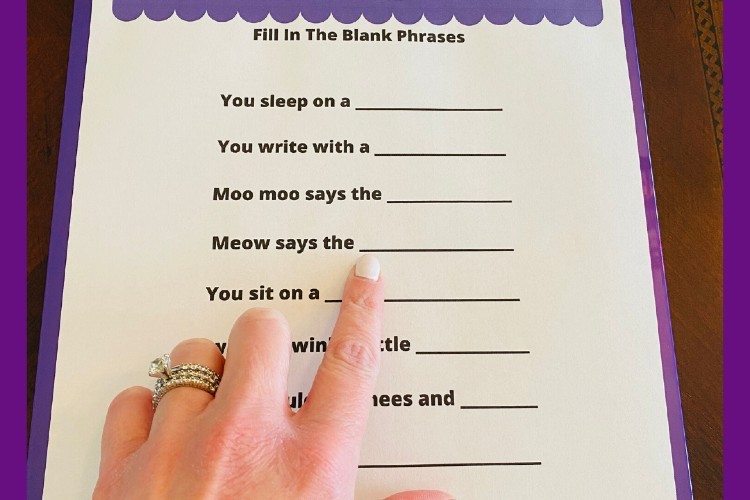
  • Meow says a ____/Ribbit says a _______ (Reverse fill-ins)
  • Tell me something that flies in the sky, it’s an animal, and it says “chirp” or “tweet” (Intraverbal Feature Function Class)
  • Socks and ________/Knife, spoon and ______ (Associations)
  • You use a towel to _______ (Functions)
  • Where do you bake cookies?/What can you kick? (WH questions)
  • Is a banana a vegetable? (Yes-No questions)
  • Name something that does NOT have a tail. (Negation)

Do Nots when teaching Intraverbals:

  • Do not begin teaching intraverbals too early or at too high of a difficulty level.
  • Do not wholly avoid teaching intraverbals …they’re the building blocks of conversation.
  • Do not begin teaching intraverbals before echolalia is under control. Otherwise, the child will just repeat your question or statement and become frustrated when that isn’t the correct answer.

Intraverbals can often be quite challenging and time-consuming programs to teach during ABA therapy.

When working with individuals with Autism, it is essential to note that skills may be displayed in a fragmented manner. For example, a child may be able to count up to 100 objects but struggle to count to 5 automatically. Therefore, it is crucial to conduct a thorough assessment of the child’s abilities and closely analyze their programs before introducing intraverbal teaching methods. If uncertain, it is advisable to consult a qualified BCBA for guidance.

Assessments

Related Glossary Terms

Shaping

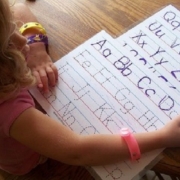
child tracing letters

Shaping is an ABA-based teaching technique in which “successive approximations” toward the target behavior being taught are reinforced until the learner can perform the behavior successfully. Let’s first define what successive approximation is. It is an attempt to perform a task that is slightly better than the previous performance. For example, an instructor reinforces the way a student writes the letter “A” each time he writes it better than the last time he wrote it.

How To Use

Shaping starts with a task analysis in which a desired behavior is broken down into smaller and more manageable steps that would move the child successively closer to that desired behavior. This is referred to as a behavior chain. There are two different types of chaining:

  • Forward Chaining is a teaching technique in which the learner is prompted/taught the first step in a series of steps with the therapist/parent performing the steps after the step targeted for learning.
  • Backward Chaining is when the ABA therapist or parent goes through each step of a process with the child with autism together until the last step, which the therapist prompts the child to complete.

Once the small approximations of the desired behavior are clearly identified, one must select the reinforcement to be used and make sure that everyone working with the child knows which behavior, when, and how to reinforce the approximations. Data on the behavior should be collected and reviewed by the team. The program must continue until the child demonstrates the desired behavior.

Summary

Shaping is a powerful tool for teaching new behaviors. It involves reinforcing small steps toward the ultimate goal. This technique is particularly helpful when the desired behavior is challenging to learn through traditional methods. By identifying and rewarding progress, shaping can lead to incredible results. Shaping is particularly helpful when the desired behavior is difficult to learn through instruction, imitation, or verbal/physical cues.

Related Glossary Terms

Receptive

Receptive ABA

Receptive language refers to the ability to understand and comprehend spoken language, such as following directions or listening to instructions. For example, if a parent asks their child to put on their coat and the child knows what that means and the steps to complete the request.

Early intervention focuses on developing receptive skills, starting with basic instructions and progressing to more complex tasks such as following multiple-step instructions and recognizing abstract features.

What is an example of Receptive ABA?

An example of receptive ABA is teaching a child to identify objects or symbols. This can include teaching them to name items such as a toy, a piece of clothing, or a food item, or to recognize and respond to certain symbols such as the letters of the alphabet. Receptive ABA also includes teaching an individual how to respond appropriately when given verbal instructions, such as “Sit when asked.

Instructions should only contain the relevant information. Present Clear and Concise Instructions.

Avoid: “Will you look at me please?”
Ideal: “Look” or “Look at me”

Assessment for Receptive Language Deficits

The Verbal Behavior Milestones and Assessment Placement Program’s Barriers Assessment is a helpful tool for assessing learner responses that may hinder the acquisition of receptive language programs. It includes various sections that can assist instructors in identifying responses and deficits that may interfere with the acquisition of receptive language programs, such as limited scanning skills, difficulties observing auditory stimuli, and problem behavior. Instructors can then use the assessment results to choose appropriate observing responses.

ABA Program to Teach Receptive Language

Receptive programs use Applied Behavior Analysis (ABA) techniques to help children develop the ability to understand language. These activities typically involve modeling a response to language and then providing reinforcement when correct responses are given. Examples of these activities include teaching a child individual words, identifying objects or images, following instructions, answering questions, and sorting items according to category.

Useful for teaching:

  • Instruction following
  • Identification of stimuli in the environment
  • Completion of different activities

Receptive Programs for Early Learners

  • Receptive Instructions
  • Receptive Identification of Common Objects
  • Receptive Identification of Body Parts

Parents naturally begin to teach their children receptive language from a very young age. From naming objects and colors, to letters and numbers, parents are teaching their children through everyday activities. As the child develops into a toddler and then a preschooler, they should be able to understand more complex instructions with increased accuracy.

Using Applied Behavior Analysis (ABA) as an intervention for children with autism who have delays in receptive language development can be highly effective. ABA techniques, such as prompting, reinforcement, and shaping, are used to teach the child to understand and respond to verbal communication. Prompting is when a therapist provides cues or clues that help the child better comprehend what is being said.
Reinforcement is used to help the child understand that a specific behavior or response will result in a reward or consequence. As the child begins to comprehend and respond correctly, more difficult tasks are introduced.

ABA techniques can be used in both one-on-one and group settings.

Let Leafwing Center help establish a treatment plan to help your child with autism get over the development hurdles. We are able to administer a receptive language program that is tailored to your child’s specific needs. Give us a call today!

Additional Glossary Terms:

Behavior Chain

Behavior Chain

A behavioral chain consists of a series of steps that occur in a specific order, resulting in a complex behavior. Essentially, it is a set of steps used to carry out intricate actions like washing your hands.

Before implementing a chaining procedure, a task analysis must be conducted in which a complex behavioral unit is broken down into smaller stimulus-response units known as links.

Behavior chains are utilized as effective strategies to teach children with autism diverse skills, ranging from self-help tasks and vocational abilities to communication.

What is the difference between a behavior chain and chaining?

Chaining is a teaching method that involves using behavior chains, which are sequences of individual behaviors that create a final behavior when linked together. The first step in teaching a behavior through chaining is to conduct a task analysis.

What are the three types of chaining in ABA?

Chaining may be used to teach complex behavior using three main methods: forward chaining, backward chaining, and total task chaining.

Chaining types:

  • Forward chaining – The forward chaining technique is a teaching method used by educators to help children learn new skills and behaviors. It is based on the idea of breaking down complex tasks into smaller, more manageable steps and having the child master each step before progressing to the next. This strategy allows the learner to build upon what they already know, as they become increasingly comfortable with each step, instead of trying to tackle the whole task.
  • Backward chaining – The backward chaining technique is like forward chaining, but in reverse. It starts from the last step of the task and moves backwards. This method is used when it’s easier to teach a child from the end of the task. The teacher helps the child until they reach the last step. Backward chaining is the procedure that is typically used for people with limited abilities.
  • Total task chaining – The total task chaining method consists of teaching a complex behavior in one trial. This method involves breaking down the entire behavior into individual components which are then sequentially linked together until the desired outcome is achieved. The goal of total task chaining is to give the learner an understanding of how each component contributes to the overall behavior.

Creating a task analysis:

  1. Watch someone complete the task
  2. Write down each step from beginning to end of completing the task
  3. Have someone else use the steps written down to complete the task (Make adjustments to the steps as needed)
  4. Present the task to the child or watch the skill performance in the natural setting
  5. Take data on the child’s performance with each step of the task
  6. Based on the data, decide which chaining method to use

Example of a task of putting on a coat:

  • Locate his coat from the hooks in the hall
  • Lay the coat down on the floor
  • Make sure the zipper/buttons are facing up
  • Locate the top of the coat
  • Stand with the tips of your toes touching the top of the coat
  • Squat down
  • Place your arms out in front of you, palms facing down
  • Slide one hand partway into the sleeve on the same side
  • Slide your other hand partway into the other empty sleeve
  • Leaving your hands in the sleeves, slowly start to stand up
  • Raise your arms, with the coat, slowly in front of you
  • “Flip” the coat over your head
  • Slide your hands the rest of the way through the sleeves

Which chaining method is the most effective?

The chaining method that a therapist or parent might use will determine the child’s learning level, the complexity of the task and what the task analysis revealed as the preferred method.

Backward chaining has advantages for teaching individuals with difficulties learning complex behavior, as it allows them to earn natural reinforcement at the end of the chain. This method is particularly useful for those with severe delays, as they can complete the last step and immediately see the outcome of the chain without needing additional prompts.

Forward chaining has both advantages and disadvantages. One advantage is that it provides additional practice for responses at the beginning of the chain. However, a disadvantage is that it necessitates the use of arbitrary reinforcers to teach earlier responses. Additionally, earlier responses are put on extinction as chaining progresses, which means that simply placing soap on a dirty fork is no longer reinforced.

Total task chaining has advantages and disadvantages. It allows all responses to be practiced at once. However, reinforcement is delayed until the entire sequence is practiced, making teaching the response chain harder. The best approach depends on the child’s needs and preferences and the intervention goals. Therapists can expose clients to different chaining procedures to determine their preferred teaching method. No one-size-fits-all recommendation can be made.

Research has shown that behavior chains are effective learning procedures for children with autism. These procedures have been used to teach vocational tasks and daily living activities. Further studies have explored the use of behavior chains in activity schedules.

Other Glossary Terms in this series:

Backward chaining
Forward chaining
Chaining
Task analysis

Avoidance Contingency

Avoidance Contingency
The definition of avoidance contingency is a response you engage in that postpones or prevents a stimulus from occurring.

What is Avoidance Contingency in ABA?

Avoidance contingencies are often used to address unwanted behaviors. For instance, if a child exhibits aggressive behavior, such as hitting, yelling, or screaming when they do not get what they want, then their parent can use avoidance contingency by removing them from the situation and putting them in a time-out. This removes rewards for aggressive behavior and prevents the child from getting what they wanted. Additionally, this teaches the child that engaging in aggressive behaviors will result in a consequence.

Examples of Avoidance Contingency for Parents and Teachers

Avoidance contingencies can be used by parents as well as teachers as tools for teaching children appropriate behaviors. Parents might set up rewards for their children who stay away from certain activities that are considered unacceptable, such as gambling or drinking alcohol. Teachers can also use similar strategies with students who are having difficulty following rules or engaging in inappropriate behavior; instead of punishing them, the teacher will reward them for behaving appropriately and staying away from those activities that aren’t beneficial for them in any way.

Don’t be confused between avoidance and escape

  • Avoidance: To set your alarm to go off at a later time
  • Escape: To keep pressing snooze on your alarm clock

Alternative to Avoidance Contingency

Another form of avoidance contingency can involve reinforcing positive behavior rather than punishing negative behavior. For example, if a child throws food at mealtime, their parents could reinforce the positive behavior of keeping their hands on the table by giving them praise when they do so. This reinforces the desired behavior and makes it more likely that they will continue to keep their hands on the table instead of throwing food at mealtime.

Is Avoidance Contingency Effective?

Ultimately, avoidance contingencies can be effective when used properly and appropriately; however, they should not be used as a substitute for other forms of discipline or positive reinforcement techniques that could also be successful in teaching desirable behaviors in both adults and children alike.

In conclusion, avoidance contingencies involve performing actions that prevent or delay an event or outcome from occurring when something undesired is about to happen. It can be used to address unwanted behaviors by removing rewards for negative behaviors or reinforcing positive behaviors instead of punishing negative ones.

Are you having a difficult time breaking the cycle of inappropriate behavior with your child? Let Leafwing guide you through some helpful strategies that can be applied at home. Contact Leafwing today to set up an appointment.

Planned Ignoring

Planned Ignoring

Planned ignoring is when parents intentionally ignore certain behaviors from their children. It’s done to prevent attention-seeking behaviors. For instance, if a child throws tantrums when their mother is on the phone, planned ignoring may be employed. This technique tests whether the child’s tantrums are attention-seeking. By ignoring them, the child learns that their tantrums won’t work. This can be an effective intervention tool for the future.

Planned ignoring is a type of extinction procedure. Extinction stops rewarding previously rewarded behavior. It reduces inappropriate behaviors in children. But it is challenging to implement. Changing the way, you respond changes a child’s expectations suddenly. When implementing extinction procedures, it is important to remember the following:

  • Be consistent with your planned ignoring
  • Reinforce other behavior
  • Get ready for extinction burst

There are five key elements to effective planned ignoring:

  1. Only ignore behaviors that students do for attention.
  2. Planned ignoring is never an appropriate strategy for behavior that is harmful to the student or others.
  3. Identify specific behaviors to ignore.
  4. Provide positive attention (see Using Behavior-specific Praise) for appropriate behavior.
  5. Do not give attention to the behavior. The behavior you ignore will get worse before it goes away.

What is an example of planned ignoring in the classroom?

As an example, you can ignore John if he blurts out in class, but as soon as he raises his hand you can respond with, “Thank you for raising your hand to get my attention!“

Effectively planned ignoring can help students unlearn problem behaviors that obtain attention and, when paired with positive reinforcement, teaches them more socially appropriate behaviors to interact with peers and adults.

What can I do instead of planned ignoring?

When faced with difficult behavior, instead of implementing planned ignoring, reinforcements, or consequences, consider using supportive listening, calming methods, and skill-building techniques.

But with a child with autism, more often than not, the challenging behaviors are not to get attention.

What may be happening:

  • When the child yells because their routine has been interrupted, they are not looking for attention, they are likely protesting the disruption of a routine that is important to them.
  • Or, when a high school student calls out inappropriately in class, it’s probably not to get a laugh, but it may relate to missed social cues and trouble generalizing learned social skills.
  • Furthermore, when a child has a meltdown in the grocery store, it may be due to sensory overload, not because they want more attention.

Planned ignoring is effective when the behavior is driven by the desire for attention, which may be the case for some children with autism. However, if attention-seeking is not the motive, this strategy is not appropriate.

Is planned ignoring negative punishment?

One problem with negative punishment is that it works as long as the stimulus is consistently removed. However once the punishment stops, the undesired behavior will likely resume. Another drawback is while it can stop an undesired behavior, it doesn’t provide information on the desired action.

Additional Glossary Terms:

Aversive Stimulus

Example of Aversive Stimulus

An aversive stimulus is anything that someone simply does not like. Those things vary per person at any given time.

How is Aversive Stimulus used in ABA?

In Applied Behavior Analysis (ABA), an aversive stimulus refers to something that an individual finds unpleasant but is presented in order to reduce the occurrence of the target behavior. The purpose of using an aversive stimulus is to change or eliminate the behavior and replace it with a more desirable one. ABA practitioners use various techniques to increase desired behaviors and decrease maladaptive behavior, and one technique involves Positive Punishment. Positive Punishment is the addition of an aversive stimulus following a behavior in order to decrease the likelihood of that behavior occurring again.

For example, if a child hits another child, the therapist may give the child a time-out, which is a form of positive punishment. The child is being given an aversive stimulus (being removed from the activity) in order to decrease the likelihood of hitting again.

However, it is important to note that punishment should only be used as a last resort in ABA therapy. Positive reinforcement, such as praise and rewards, is generally more effective in increasing desired behaviors.

When to use Aversive Stimulus?

In order to determine if an aversive stimulus is an appropriate intervention, it is important to consider the potential consequences of the behavior being targeted. Aversive stimuli, such as verbal reprimands, yelling, and harsh punishment, should be used sparingly in Applied Behavior Analysis (ABA) interventions. Although there is evidence that some behaviors can be reduced through the use of aversive stimuli, there are potential risks associated with their use.

The potential risks of aversive stimuli:

  • Running away
  • Getting away
  • Dodging it

When an aversive stimulus is used in ABA, it is important for the therapist to ensure that the behavior being targeted is addressed and not simply avoided. This means that when using an aversive stimulus, the therapist must work to make sure that the behavior itself is addressed and changed rather than just having the person avoid or escape the situation. To do this, the therapist must ensure that any reinforcement given for the appropriate behavior is greater than the aversive stimulus.

Does Aversive Stimulus work?

The therapist should also keep track of how long it takes for the person to respond to the reinforcement and record any changes in behavior that occur after the aversive stimulus is used. Additionally, it is important to ensure that an appropriate amount of time passes between when an aversive stimulus is presented and when reinforcement is given for the appropriate behavior is greater than the aversive stimulus. Additionally, the therapist should keep track of how long it takes for the person to respond to the reinforcement and record any changes in behavior that occur after the aversive stimulus is used. This will help determine if any progress has been effective.

Helpful tip:

  • If behavior goes up? Reinforcement is at work.
  • If behavior goes down? Punishment is at work.

Time-out

Time-out

In Applied Behavior Analysis (ABA), time-out is classified as a negative punishment procedure. Negative reinforcement involves removing a stimulus in order to decrease a behavior. Using a time-out after problem behavior is displayed can reduce the likelihood of the problem behavior re-emerging in the future.

The use of time-out can reduce or stop problem behaviors; however, it does not show appropriate behaviors. It should be used together with teaching and encouraging appropriate behavior while also providing positive reinforcement. Positive reinforcement is the addition of something to enhance that behavior’s odds of recurrence in the future, such as praising, rewarding, or allowing access to toys/privileges when the desired behavior (completing chores) occurs.

Three major types of time-outs:

  • exclusionary – involves removing the child from the reinforcing situation but not from the room or area of activity. For example, sending a child to a corner of the room or a chair positioned away from the ongoing activity.
  • non-exclusionary – similar to exclusion time-out in that the child is removed from the reinforcing situation for a certain amount of time but may still observe the ongoing activity of the class.
  • isolation – a behavior modification technique of removing the child from their environment of reinforcement to one that does not offer any incentive for their behavior.

Time-out for children with special needs

Time-out can give autistic children or children with developmental delays a safe space to work on calming themselves.

When TIME-OUT as a discipline technique is not recommended for a child with autism who:

  • use aggressive or self-injuring behavior, because it can reinforce the behavior.
  • avoid interaction with others because these children might misbehave as a way of being sent to time-out.
  • behaviors (repetitive hand flapping, repetitive tapping) will maintain or even increase the behavior.
  • tends to be withdrawn. It could end up being a reward rather than a negative consequence if it gives your child time alone.

How to use time-out

First, you must decide what type of behavior warrants a time-out such as fighting, arguing, or throwing tantrums. Secondly, you must try to enforce the time-out fairly and consistently. Finally, designate a space for the time-out. Never use their bed. Make sure to use an age-appropriate length of time for the time-out. The timer does not start if the child engages in the problem behavior (crying, whining, or tantrum) while in time-out. Let them know what you expect of them like keeping your hands to yourself and sitting quietly for one minute.

The time-out should always have verbal warnings before the discipline to allow the child to make appropriate choices. If their bad behavior continues, they should have an explanation for the time-out as they are being escorted to that area. Even one-year-olds understand when they have reached their parental limit, but the explanations should be age appropriate.

However, for time-out to be successful, the parent must confirm that the toys or activities the child is doing are highly preferred. For example, if a child is told to do chores (non-preferred activity) and then he/she hits their sibling, time-out should not be used because it delays having to do the chores. If a parent is consistent with this, the child’s hitting may increase in the future because they will learn that when they hit a sibling, they can delay doing the non-preferred activity.

Afterward, both the parent and the child should try to leave the incident behind.

Alternative discipline techniques for children with autism

The following discipline techniques can guide all children toward appropriate behavior and away from inappropriate behavior:

  • praise and rewards for appropriate behavior communicates to your child what you like about their behavior
  • clear rules about behavior let the child know what is expected of them
  • positive consequences for appropriate behavior
  • negative consequences for inappropriate behavior
  • modeling social skills for handling unfamiliar or difficult situations

Bio-Medical Approach

Bio-medical Approach
A bio-medical approach to treating autism focuses on the potential biological roots of autism, such as heavy metal toxicity or yeast overgrowth, or certain difficulties related to food processing. Many physicians believe that problems with the immune, digestive, or endocrine systems are linked to autism symptoms. This method seeks to target these biological processes in individuals’ medical care.

Medical Treatments for Individuals with autism

A biomedically-oriented approach to autism necessitates conducting various medical assessments on the child or individual. Many diagnostic exams can be administered with a blood sample or the patient’s excretion; thus, tests may typically be accomplished during one appointment or at regular intervals in the person’s life.

Types of Tests:

  • A tilt table test may be performed to check for gastroesophageal reflux disease.
  • A blood sample might be collected to determine if the child has heavy metal poisoning or a nutritional deficiency.
  • Urine testing may be performed to check the child’s metabolic function.
  • Testing for oxalates, which are fungi found in certain medications used to treat common bacterial infections, may also be performed.
  • Microbial testing from a stool sample, nasal swab, or saliva sample may also be collected and analyzed, in order to determine if the child has a buildup of yeast or bacteria in the digestive or nasopharyngeal tract.

Bio-medical treatment addressing gastrointestinal issues, nutrition imbalances, immune system irregularities, or detoxification concerns might help to reduce the need for powerful psychiatric medications in autism care. Each plan is tailored to the individual.

Naturopathic Therapies for autism

Natural treatments for autism are great complementary treatments that work well in conjunction with other therapies and services. For example, some parents find that eliminating foods with artificial food coloring lessens symptoms. Others have had success with eliminating foods that contain gluten, casein, or processed sugar. The addition of vitamins such as B12 or nutrients such as omega-3 fatty acids has also helped with the autism symptoms of some children. The parents or caregivers will be the ones who will help drive this time of strict regimen.

Benefits of a bio-medical diet

  • gastrointestinal benefits (decreased constipation, diarrhea, and cravings)
  • immunological benefits (decreased allergies, migraines, or abnormal infectious disease reactions)
  • neurological benefits (positive alteration to sensory impressions)

It is hard to specify precisely how successful the bio-medical way of handling autism has been. At this moment, there is insubstantial proof regarding its efficacy. Since various symptoms of autism are not precise, it can be difficult to assess if bio-medical techniques and modalities are responsible for patient advancement entirely. Nonetheless, evaluating a medical approach to autism is something families must consider beforehand employing psychiatric drugs to control autism signs. This therapy plan might also be significant for autistic patients who cannot take pharmaceuticals or have swallowing disorders that stop them from ingesting the medicine. Evidently, grasping the bio-medical method to autism gives parents and caretakers more alternatives for granting their child with the finest support, attention, and possibility.

Other Resources:

Autism Feeding Issues
Foods to avoid with autism