
Autism Communication Strategies: Evidence‑Based Tools That Help Your Child Connect
This quick video explains how clear, simple language can make communication easier and less stressful for autistic children.
Autism communication strategies are essential techniques that support autistic children in developing their language and communication skills. Communication challenges, including delays in or a complete lack of spoken language, are a key diagnostic criterion for autism. Many autistic children may struggle not only to express their thoughts but also to understand what others are saying. This can lead to misunderstandings, where adults may assume the child is ignoring them when, in reality, the child may not comprehend the message.
Imagine being in a foreign country where you do not understand the language and have no way to interpret what others are saying. If someone called out to you in their language, would you respond? Likely not—because you wouldn’t understand the request. This is similar to how an autistic child may experience the world. Autism communication strategies aim to bridge this gap, providing practical methods to help children better understand and express themselves effectively.
In this guide, you’ll learn:
This guide is for:
- Parents of newly diagnosed children
- Teachers supporting autistic students
- Caregivers looking for practical communication tools
- Families exploring AAC or ABA therapy
Let Leafwing professionals educate you and your child to develop the language skills that will help guide your child to reach their full potential.

Interventions to improve communication with autistic children
Effective communication interventions can significantly enhance an autistic child’s ability to express themselves and understand others. Here are two key approaches:
1. Speech Therapy
A Speech-Language Pathologist (SLP) is a key professional in evaluating and supporting language development. They assess an individual’s understanding and use of language and provide tailored intervention plans. Speech therapists can:
- Evaluate a child’s language abilities and identify areas for improvement.
- Design personalized communication strategies to support verbal and non-verbal skills.
- Offer guidance to parents and caregivers on using communication techniques at home.
Example: A speech therapist might introduce visual aids like picture cards to help a non-verbal child communicate basic needs, such as requesting food or expressing emotions.
2. Applied Behavior Analysis (ABA)
Applied Behavior Analysis (ABA) is a widely recognized, evidence-based therapy designed to improve social, communication, and learning skills through positive reinforcement. It is considered the gold-standard treatment for children with autism spectrum disorder (ASD) and other developmental conditions.
ABA therapy is effective because it provides a structured learning environment, which is gradually adjusted to resemble real-life situations. This helps children transition successfully into environments like classrooms.
Key benefits of ABA therapy include:
- Teaching communication through repetition and reinforcement.
- Breaking down complex tasks into small, manageable steps.
- Gradually adapting the learning environment to reflect real-world settings.
Example: An ABA therapist might teach a child how to request a toy by first modeling the behavior, prompting the child to imitate it, and rewarding successful attempts with positive reinforcement.
ABA therapy programs are effective in treating children with autism because they create very structured environments where conditions are optimized for learning. Over time, these very structured environments are systematically changed so that the environment mimics what a child could expect if and when they are placed in the classroom.
By combining these intervention strategies, caregivers and professionals can provide comprehensive support to foster meaningful communication in autistic children.
Autism communication strategies: Visual supports
Visual supports are concrete cues that help communicate and build language skills. This can incorporate the use of symbols, photos, written words, and objects to help children with autism to learn and understand language, process information, and communicate.
We take for granted the different ways we communicate daily, which include:
- Language: How we represent information – what words mean and how we combine them.
- Receptive – refers to how your child understands language.
- Expressive – refers to how your child uses words to express himself/herself.
- Speech: A verbal means of communicating – using sounds to make words.
- Non-verbal methods: gesture, facial expression, eye contact, etc.
- Pragmatics: How individuals use language in social situations. It includes the following conversation ‘unspoken’ rules, for example, taking turns.
Many children on the autism spectrum respond well to visual information. Visual information can be processed and referred to over time, whereas spoken communication is instant and disappears quickly.
Visuals can involve communication books or boards that use images and/or words on cards to help the individual learn the word and its meaning. The child can point to the image when they want to communicate. For example, if the child is thirsty, they can point to an image of a glass of water. As the child learns more symbols and words, they can use them to create sentences and to answer questions. Others can also use the images to communicate with the child. This is known as the Picture Exchange Communication System and can be used to develop intentional and functional communication.
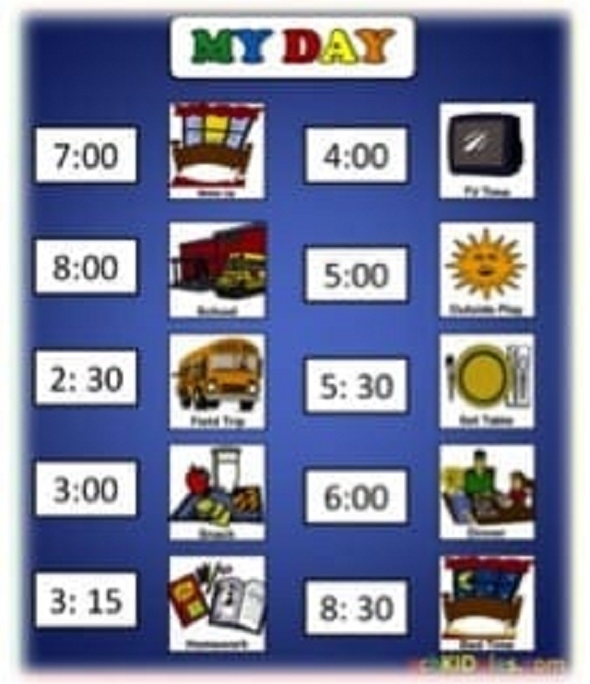
Another autism communication support tool is known as a visual or picture schedule. This helps individuals learn routine steps, like getting ready for bed. A series of pictures show the steps in order, and over time, they learn each step.
Furthermore, visual schedules can be used to show a person on the spectrum what is happening next or show when there is a change in routine. As people on the spectrum generally don’t like change, this can help them prepare for a change and cope with it more easily. This enables the language surrounding change to be more easily understood and allows individuals to refer back to schedules throughout the task and their day.

Autism communication strategies: Augmentative and alternative communication (AAC)
Augmentative and alternative communication (AAC), helps individuals who cannot talk or are very hard to understand. AAC means all of the ways that someone communicates besides talking. People of all ages can use AAC if they have trouble with speech or language skills. This provides another way to help them communicate other than verbally. AAC includes:
- Sign language
- Gestures
- Pictures, photos, objects, or videos
- Written words
- Computers, tablets, or other electronic devices
AAC can help children with autism and can even assist with developing spoken communication. Many people wonder if using AAC will stop someone from talking or slow down language development. This is not true—research shows that AAC can actually help with these concerns! People who use AAC can also learn how to read and write.
Speech generation devices either play pre-recorded words via a switch or button or sound out text that is typed into them. Using the previous example, a hungry child can press the ‘food’ picture button, and the device will say, ‘I want to eat.’ While these tools can be used to replace speech, they can also be used to help a child develop speech. They do this by helping the child to recognize sound patterns, which can be used with visual aids to build language skills.
These systems can also help children learn words as they begin to associate the sounds and pictures with each other. They also help by slowing down communication, giving the child more time to process the information and avoid becoming overloaded.
Quick Wins You Can Try Today
- Use one picture card for a highly preferred item
- Pause 3–5 seconds after asking a question
- Model gestures like pointing and nodding
- Narrate what your child is already doing
Autism communication strategies: Guidelines for nonverbal autistic children
No matter where your child falls on the spectrum for autism, they have the ability to communicate in some manner. Here are some simple guidelines to consider when trying to help your child communicate with you and others.
- Encourage play and social interaction. All children learn through play, and that includes learning the language. Interactive play provides a delightful chance for you and your child to communicate. Play games that your child enjoys. Incorporate playful activities that promote social interaction. For example, singing, reciting nursery rhymes, and gentle roughhousing. During your interactions, crouch down close to your child so your voice and face are closer to them, increasing the chance of them looking at you.
- Imitate each other. Copying your child’s sounds and play behaviors will encourage more vocalizing and interaction. It also encourages your child to copy you and take turns. Make sure you imitate how your child is playing – so long as it’s a positive behavior. For example, when your child rolls a car across the floor, then you, too, roll a car across the floor. If they crash the car, you crash your car, too. Be sure not to imitate inappropriate behavior like throwing the car!
- Focus on nonverbal communication. Gestures and eye contact can build a foundation for language. Encourage your child by modeling and responding to these behaviors. Exaggerate your gestures. Use both your body and your voice when communicating – for example, by extending your hand to point when you say “look” and nodding your head when you say “yes.” Use gestures that are easy for your child to copy. Examples include clapping, opening hands, reaching out arms, etc. Respond to your child’s gestures: When they look at or point to a toy, hand it to them or take the cue for you to play with it. Similarly, point to a toy you want before picking it up.
- Give time for your child to talk. We naturally want to fill in the missing words when a child doesn’t respond quickly. Giving your child many communication opportunities is essential, even if they are not talking. When you ask a question or see that your child wants something, pause for several seconds while looking at them enthusiastically. Watch for any sound or body movement and respond promptly. The promptness of your response helps your child feel the power of communication.
- Simplify your language. Be literal and obvious in your choice of language. Say precisely what you mean. Speak in short phrases like “roll ball” or “throw ball.” You can increase the number of words in a phrase once your child’s vocabulary increases.
- Follow your child’s interests. Rather than interrupting your child’s focus, follow along with words. Use simple words about what your child is doing. By talking about what engages your child, you’ll help them learn the associated vocabulary.
- Consider assistive devices and visual supports. Assistive technologies and visual supports can do more than take the place of speech. They can foster its development. Examples include devices and apps with pictures that your child touches to produce words. On a simpler level, visual supports can include pictures and groups of pictures that your child can use to indicate requests and thoughts.
Remember, the more concise and simpler the instruction, the more successful the child will be. It is important to note that the simplicity or complexity of language used should be based on the child’s language repertoire at that particular time. Over time, and with success, simple and concise instructions will be elaborated, and more language will be part of their communication.
Common Mistakes to Avoid
Supporting communication can feel overwhelming, especially when you’re trying to figure out what works best for your child. These are some of the most common pitfalls parents and caregivers face, and simple ways to avoid them.
- Using long or abstract language
Children with autism often process information more easily when language is clear and concrete.
Try instead: short phrases, simple words, and visual cues. - Asking open‑ended questions too often
Questions like “What do you want?” or “How was your day?” can be stressful when a child isn’t ready for that level of language.
Try instead: offering two choices or modeling a simple response. - Expecting speech before communication
Speech is only one form of communication. Many children communicate through gestures, pictures, AAC, or sounds long before words emerge.
Try instead: celebrating any intentional communication — pointing, reaching, eye gaze, or using a picture card. - Introducing too many visuals at once
Visual supports are powerful, but too many can overwhelm a child.
Try instead: starting with one or two visuals for highly preferred items or routines. - Correcting or “fixing” language too quickly
Children may script, echo, or use partial words as they learn. Over‑correcting can shut down communication attempts.
Try instead: modeling the next step (“car” → “big car”) and reinforcing the attempt. - Talking at the child instead of with them
Rapid instructions or constant prompting can feel overwhelming.
Try instead: slowing down, pausing, and creating space for your child to respond. - Assuming a child is ignoring you
Many autistic children need extra processing time or benefit from visual cues.
Try instead: giving a 3–5 second pause, using gestures, or showing a picture to support understanding. - Waiting for frustration before offering support
If communication only happens during moments of distress, children may associate it with stress.
Try instead: practicing communication during calm, joyful moments.
Avoiding these common communication pitfalls can make everyday interactions feel calmer, clearer, and more connected for both you and your child. Progress doesn’t come from perfection — it comes from small, consistent moments of modeling, pausing, and celebrating every attempt your child makes to communicate. If you’re unsure which strategies fit your child’s needs, or you’d like guidance tailored to their communication style, LeafWing Center is here to support you. Our clinical teams across Palm Desert, Apple Valley, Orange, Sherman Oaks, Menifee, Torrance, and Phoenix, AZ provide evidence‑based ABA services that strengthen communication, reduce frustration, and help children build confidence in meaningful, everyday ways.

Autism communication strategies: How ABA therapy can help
ABA therapy is effective through the identification and targeting of skill development goals. ABA therapy will typically address skill deficits across several domains. These domains will vary and depend on the individual needs of the learner.
As behavior analysts, it is our responsibility only to administer ABA-based treatment programs that have proven effective given a specific difficulty. This is called evidence-based practice. The specifics of a treatment program will vary from one person to another, but the foundations of treatment programs are the same. A foundation derived from sound, empirically proven methods repeatedly implemented in the applied setting over time.
Key Takeaways: Communication Strategies for Autistic Children
- Implement Visual Supports: Utilizing tools like picture cards, social stories, and visual schedules can enhance understanding and expression for autistic individuals, as they often process visual information more effectively.
- Employ Augmentative and Alternative Communication (AAC): For non-verbal individuals, AAC methods such as speech-generating devices or communication boards provide alternative avenues for interaction, facilitating more effective communication.
- Engage in Speech Therapy: Working with Speech-Language Pathologists (SLPs) can help assess and develop both verbal and non-verbal communication skills, offering tailored strategies to improve language abilities.
- Utilize Applied Behavior Analysis (ABA) Therapy: ABA therapy employs positive reinforcement to teach communication and social skills, breaking down complex tasks into manageable steps to facilitate learning.
- Use Clear and Concise Language: Communicating with straightforward and direct language helps individuals with autism understand messages more easily, reducing potential confusion.
Implementing these strategies can significantly enhance communication with individuals on the autism spectrum, leading to improved interactions and quality of life.
Listen to:
Related Glossary Terms
Other Related Articles
Frequently Asked Questions about Parenting Your Autistic Child
How can I support my child’s reading and literacy development?
Parents often wonder how to help their child engage with reading. Evidence‑based strategies—such as breaking tasks into small steps, using visual supports, and reinforcing progress—can make literacy more accessible and enjoyable.
What should I avoid doing when my child is experiencing challenging behaviors?
It can be hard to know how to respond in the moment. Many parents ask what not to do, such as avoiding accidental reinforcement of behaviors or reacting in ways that increase stress.
Why is following through with instructions so important?
Consistency helps children understand expectations. Parents often want to know how follow‑through builds predictability, reduces confusion, and supports skill development.
How can I make grocery shopping easier and less overwhelming for my child?
Public outings can be stressful. Parents often look for tips on planning ahead, using visuals, practicing skills at home, and creating a predictable routine for shopping trips.
What sports or physical activities are good for children with autism?
Families often want to know which sports are supportive of sensory needs, motor development, and social growth—and how to choose activities that match their child’s interests.