
ABC’s of Behavior
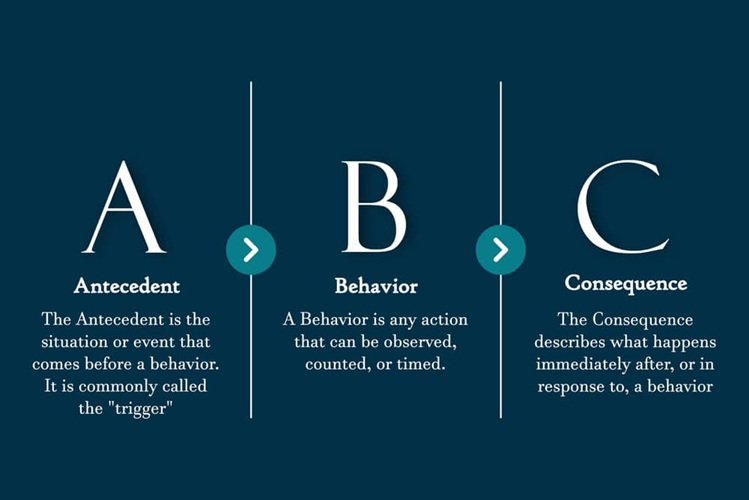
The ABCs of Behavior, also known as the 3-term contingency, is a simple but powerful tool used to understand why a behavior happens. By breaking behavior down into three parts, parents, caregivers, and teachers can identify patterns and make better decisions about how to respond.
- A = Antecedent → What happens right before the behavior of concern. Example: A teacher gives a math worksheet. Learn more about antecedents here.
- B = Behavior → The actual behavior of concern. Example: The student crumples the worksheet. Learn more about behaviors here.
- C = Consequence → What happens right after or during the behavior. Example: The teacher removes the worksheet and gives the student a break. Learn more about consequences here.
Why the ABCs Matter
- They help us see patterns: Does the behavior happen after a certain demand, time of day, or interaction?
- They clarify the function of behavior: Is the child trying to escape, get attention, access something, or self-stimulate?
- They guide intervention planning: Once we know the “why,” we can change the antecedent, teach a replacement behavior, or adjust the consequence.
Example in Practice
- Antecedent: Parent says, “Time to clean up toys.”
- Behavior: Child screams and throws a toy.
- Consequence: Parent delays cleanup and helps the child instead.
This may be an escape behavior – the child is trying to get out of cleanup.
In this example, the ABCs show that the behavior may function to avoid cleanup. Knowing this, the parent can plan a new strategy (e.g., give a 2-minute warning, use a cleanup song, or reinforce small steps).
Escape vs. Avoidance: Understanding the Function
Two common behavior functions are Escape and Avoidance – both are ways a child may try to get out of something unpleasant.
Escape Contingency
- The behavior happens to get away from something that’s already happening.
- Example:
- A: The teacher gives a math worksheet.
- B: Student pushes it away and yells.
- C: Teacher removes the worksheet.
- Learn more
Avoidance Contingency
- The behavior happens to prevent something from happening in the first place.
- Example:
- A: The student sees the teacher approaching with a worksheet.
- B: Student hides under the desk.
- C: Teacher decides not to give the worksheet.
- Learn more
Understanding these contingencies helps us respond with empathy and strategy, not just discipline.
Key Takeaways for Parents & Teachers
- Always look at the whole picture — what happened before, during, and after.
- Avoid labeling behavior as “bad” — instead, ask what the child is trying to communicate.
- Use the ABCs as a neutral observation tool to guide supportive responses.